Tuesday, April 29, 2014

Using inexpensive plastic boxes for photography accesories


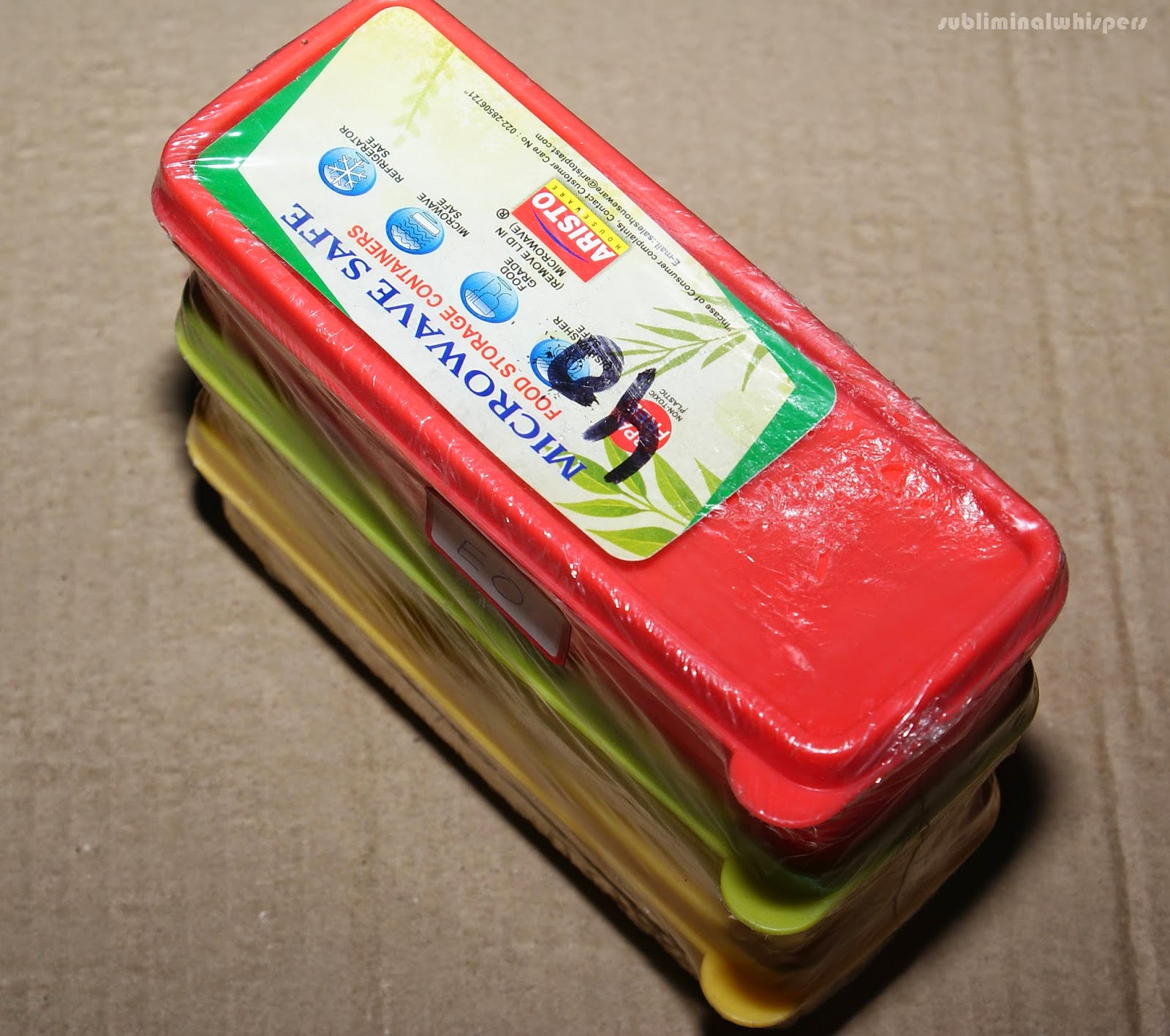
I looked up for some CF card holders online and was surprised to find that they cost a minimum of Rs 699 (a little over $10 US) so went out hunting at local utilities stores and found these inexpensive plastic boxes and bought a bunch of them. The reason I decided to buy them is to make sure the contacts on my CF cards and batteries do not scratch. All the six boxes cost me just Rs 65, which is $1 (yeah one dollar). These boxes were made by some Indian company called Aristo plast and some other nameless company. I am sure you can find similar boxes at your local utilities store. Happy hunting.


Friday, March 28, 2014

Digiflip CB001 Bag Review


 Digiflip CB001 camera bag

This is the second camera bag I bought from flipkart, the first one being the Lowepro 150 Mica. When I first wanted to buy a DSLR bag, this was the one I wanted, but chose instead the Lowepro, thinking it would be big, but unfortunately no. Still the Lowepro, though small, can carry two camera bodies with lenses and accessories, if you are intelligent enough to fit them in. The quality of the Lowepro is top notch to say the least compared to the Digiflip CB001. 

here is the package it arrived in


Before saying anything about this bag, I would like to add that they are many off brand bags available in the market in the Rs.1000 – Rs.2000 category which are much better made than the Digiflip CB001. In my local camera market I happened to come across an off brand bag for Rs.1500 that was big enough and sturdy enough to handle two pro bodies, many lenses and accessories. 


I understand this is flipkart’s own brand and they may have added a pocket or two from the previous versions. In regard to the Lowepro bag I ordered earlier, I was relieved to find that this bag is big enough to accommodate all my gear. The quality is good compared to the price @ Rs.1050/- ($16).


Digiflip logo on the top compartment 
 
The bag has two compartments, top and bottom. The bottom part holds the camera bodies and lenses whereas the top part is zippered where you can put in your flashes, filters, cards, etc. All in all, this bag is a great value for money. The pics are from when it arrived in November 2013.

 Nicely laid out compartments
inside the Digiflip CB001 camera bag


What all I put in the bag??

Bottom Compartment

  1. Nikon D200 Body
  2. Nikkor 18-70 lens with hood
  3. Nikkor 50mm lens
  4. Sigma 28-105 Lens
  5. Sony a200 Body
  6. Sony 18-70 lens
  7. Power cables and data cable in the front pocket
  8. Canon 430 EX flash
  9. Nikon Battery Charger
  10. Sony Battery charger.
  11. AA battery charger

Top Compartment 
 
  1. 8 AA batteries in the top most pocket along with Sony and Nikon camera batteries
  2. Diffusion material in the top compartment.
  3. Blower
  4. Sensor cleaning kit
  5. Collapsible hoods
  6. Marker
  7. Business Cards
  8. Triggers
  9. Cleaning cloth

I can still make some space to fit in more things...I am a space warrior haha.

Update: After using the bag for 4-5 months, now I realize, the padding material used for panels inside the bag is not of the highest quality and might come off soon. 

Note: all pictures shot with Nikon D200 with on-camera flash.


--Viisshnu--

Friday, October 11, 2013

Using cheap flashes for professional photography

I have always loved flashes more so than any other accessory in my camera bag. Flash changed my photography thoroughly and for the better.

The following are the pictures I shot with a single Canon 430 EX flash. Its, TTL, very capable and very consistent. This flash is available for $321 new and for $169 used on Amazon. Ofcourse you can get away with using any other cheap flash and still achieve the same result.    


For more pictures please go to my page on facebook 'StudioVii" and please like the page, if its not too much to ask. Thank you :)

How I shot these?
The camera I had on me was a Nikon D200, with the 430 EX flash (NOT Canon 430 EX II) bounced to the ceiling  at 24mm, effectively making it a huge softbox/lightsource. White balance cloudy. f around 4 or 5 I think. Btw these pictures haven't been edited in anyway except cropping a bit.  I did take an elinchrome D-lite II it strobe head with me but didnt feel the need to use it as the pictures with flash were already good enough. 

Ok in the middle of things, I apologize to my dear readers if they feel my posts are a little autobiographical, that comes from my past career as a copywriter. I personally think a little bit of background story would make anything worthwhile to read J so that’s that.

A few days back I visited my local camera market (by local I mean its approx 30km from where I live) to buy a sensor cleaning kit. While I was there I asked the shop assistants to show me some cheap flashes. They showed me couple of Vivitar flashes both under $15. Yes under fifteen dollars. Bingo !!!! That’s it I thought, what if I coupled with them with some cheap flash triggers and made my own lighting system? Viola !!! that would be amazing. Since they cost under $15 I wouldn’t even have to worry if they break. The caveat? They are completely manual flashes, no TTL.  That is fine by me.


Vivitar in their hey day made excellent affordable flashes, they do now as well. Now the brand is owned by a company called Sakar International. Vivitar brand was owned by many companies in the past. Their 285HV is now a legend. It was prized by both professionals and amateurs It is still manufactured in this day and age. It’s available for approx $82 on Amazon, but comes even cheaper if bought used or on fleabay.

Not just Vivitar there are many other cheap no name flashes available for $15-$100 in the market today. Whatever you buy make sure it is reliable.  Personally I feel hundreds of $$$ for a flash is a ridiculous idea, but if you are on the OEM branded flashes side, then you can still buy the Nikon SB range and Canon speedlite flashes in the used market for much much less.


Time to talk about the Yongnuo flashes. How can one post an article about cheap flashes without talking about Yongnuo? haha. It’s a Chinese company and has been making lot of things apart from flashes. Their range of flashes are a hit in the amateur market. Their recent offerings are the cheapest TTL flashes and are available through their online store.  


So are there any downsides to using cheap flashes?, yes sure, but the positives far outweigh the negatives. Here I list some concerns.
  •     Most of these cheap flashes do not have TTL . a TTL flash will save you time, shutters and guesswork. Get a cheap flash that has TTL instead of an all manual flash, your problems are solved.
  •     Some of the older flashes due to their high voltage output may short circuit the internal mechanics of your DSLR. So do your research when using an older flash.
  •     Reliability is ofcourse an issue. These cheap $15 flashes may suddenly stop working in the middle of a shoot, so having one or two of these as a back-up is always a good idea.
So the big question – “Can you use cheap flashes for professional photography? Absolutely Yes. The difference in light between a $15 flash and a $500 flash is almost zero. Yes you can go ahead and buy that $15 flash. Cheers and happy clicking.

Here is a review of my cheap Vivitar 3200A auto thyristor flash:

http://subliminalwhispers.blogspot.in/2014/05/vivitar-3200a-auto-thyristor-flash.html

      --Viisshnu--


Monday, July 1, 2013

Nikkor 18-70 ED DX lens review


I recently had the good fortune of buying a ‘as good as new’ Nikkor 18-70 from a local seller at a reasonably low price. I was really tired of the ‘amateur’ 18-55 VR. Though its not a bad lens and produced some not so bad results, I was longing for a professional (atleast looking) lens for my D200.


I read a lot of reviews for this lens before buying it and most of them were positive. Some called it Nikon’s mistake. It’s selling around $300 online.


My gripe with the 18-55 was that it had no ED. Inspite of the fact that how much difference it made to the final image, having ED etched on the lens barrel makes it look better. It also came with a hood. I shot both casually and professionally with this lens and it has delivered decent results.


Build quality is much much better than the 18-55 VR. The front element diameter is 67mm. Its 3.5 at wide end and 4.5 at the tele end. It weighs substantially more than the 18-55.  

I also read that this lens was supplied with the D70 as a kit lens a while back. As far as I know the lens is not in production anymore.

I used this lens exclusively for a product/merchandise shoot for a Mumbai based client a few weeks back.  Here are some pics from the lens. All shot with the D200.


Sunday, April 21, 2013

Tripod DIY - Repairing or Making Your Own Quick Release

The Vivitar VPT-3600 Tripod

When I bought my Sony a200 DSLR the shop owner promised to give me a free tripod and I got it after a few days. The catch? It had no quick release plate or the fastening latch. I kept it unused for a long time. Recently I figured I could use it as a light stand and also put an umbrella adapter for full fledged use in the studio.

This model is made by Vivitar and is called the VPT-3600. It is retailing for INR 2,250 on ebay brand new. This model is very light and can be used as a travel tripod.  

After some more time I realized I can make the quick release myself. So I studied a lot of things online but nothing seemed to help. Unfortunately tripods come in variety of sizes and configurations. So do the quick releases as there is no universal standard in their size and function.

Slot for the Tripod quick release plate

I briefly even considered making the quick release by making a wooden cast and melting some plastic but realized that would be too much of a hassle and I didn’t have the tools or the expertise.
I figured the tripod is salvageable after all.

The Vivitar logo and mostly faded model name

I drew up the schematics and dimensions of the top plate.
I still haven’t made it, but sharing the info. Will soon put up the pictures or may be a video lets see.

What I am using is:
  1. 3 screws to fix the wood plate
  2. Some metal and rubber washers
  3. A ¾ inch hard aluminum (ideally somethign hard like a metal)top plate that will sit on top of the wooden plate
  4. A ¾ inch piece of wood with a thickness of 1 ¼ inch
  5. A ¼ inch bolt that will into the bottom of the camera.     
If you have a carpenter’s workshop in your area you can get it done or volunteer to do it yourself, but be careful while working the vice, saws and drilling machine.

to be continued....

Tuesday, April 16, 2013

Studio Lighting Setup For Photographer On A Budget


translucent shoot through umbrella 

Firstly, I would like to begin by saying that all or atleast most of the photography lighting equipment and gear out there is very expensive. I cannot emphasize enough on photography and lighting as they are two sides of the same coin.

After checking out the prices of photography light kits online, I decided to put together my own DIY style photography lighting setup. Its been a long time now since I have been thinking about it and I wanted to setup my own cheap, unique and effective lighting system under a budget. So I started asking, looking around and found many inexpensive solutions.  

In Hyderabad, where I live, like everywhere else, photo goods are expensive as hell. I originally wanted to put together a strobe/flash system but after much calculations realized it will cost me nearly INR 30,000 (approx. $550) for all the lighting and related accessories. 30,000 for me is not a small amount. So I started considering other options i.e cheap manual/semi automatic flashes instead of strobes. Remember if you are buying strobes you will also have to buy sturdier stands to support their weight. With flashes you don’t have that problem. 

Btw this article is NOT about Strobes Vs Flashes, but Expensive Vs Inexpensive lighting.
I feel using a flash system instead of the strobes is not only economical but it is also very portable. Can you put strobe lights in your cargo pants? I don’t think so haha. 

I did look for information on many online forums before preparing this lighting setup. We shall compare flash system with the strobe system in relation to their cost and related accessories.

A pair of elinchrome strobes on stands with soft boxes

Here is a list for the costly strobe system:

       1.Two Prolinchrome strobes – INR 18,000
       2.Two stands – INR 3,000
       3.Two reflective or shoot through umbrellas – INR 300
       4.Two simpex triggers – 1,200
       5.Umbrella mounts for stand – INR 700
       6.Cables/connectors – INR 3,000

This is just a basic list. With some more accessories the total cost of the setup will come to nearly INR 30,000.

Lets see how we fare with the flash setup we have devised.

Note: The all manual Yongnou flashes have no TTL or iTTL but you can use them to trigger other flashes/lights/strobes in Pilot/Commander/Master mode. All you need is appropriate camera settings. I am mentioning Yongnou because they have good reviews online. Some of their latest models do support TTL. You can add your own favorite brand in the list. Btw the Yongnuo YN560-II at just $77 is a great flash gun.


Yongnou 560EX flashgun (pic stolen from Yongnou site)

Some photographers swear by proprietary flash guns from Canon and Nikon. Its their opinion. The supposed quality itself does not justify the high price of these flashes that cost more than two strobes. Both Canon flash and Nikon flash are extremely expensive. Nikon’s Speedlight SB-910 and Canon’s 600 EX-RT Flash guns both cost INR 33,000+. Yes, a single flash gun from Canon or Nikon costs almost as much as 4 strobes. Yeah ! its crazy expensive and also ridiculous. But if you are really crazy about proprietary flashes then you can buy them on the used market for much less. 


Remember there many even thousands of inexpensive flash gun brands like Yongnou, Polaroid, Vivitar, Metz, Nissin and many many unknown brands. The mechanics inside any flash is almost same, so there are very much repairable and salvageable if they give trouble or anything.     


Sigma flash

With this list we are trying to go as low as possible money wise. If you have some more bucks you can choose accessories with more/better specs.

        1.Two Yongnuo manual flashes - INR 4,000
        2.Two Yongnow triggers – INR 2500
        3.Two reflective or shoot through umbrellas – INR 300
        4.Two light stands – INR 1400
        5.Umbrella mounts for light stand – INR 700

       The costing of this list is coming to a grand total of INR 8,900.

       So with this photography lighting setup you are saving INR 21,100 (approx $383). Yes a huge amount indeed. This setup is extremely useful for a small studio that is primarily into portrait photography.

Light stands

You can buy pro gear when you start making money off of your assignments, until then you have to make do with what you have and get creative.

When you are working with manual/inexpensive flashes like Yongnou or Vivitar etc you have to understand their limitations and have to turn these limitations into your advantages. On that note I would like to add that there is no shame in being poor and having no money for expensive gear. It’s really the disadvantages that teach you great lessons. In life you have two options, either you can drown your problems with a truck load of money or learn to work with your limitations and turn them into learning opportunities, creating, developing ingenious ideas and having lot of fun along your journey as a photographer.

Godspeed.....


Monday, April 8, 2013

Lowepro Photo Traveler 150 (Mica) Camera Bag Review


The Lowepro Photo Traveler 150 Mica on a chair. 
I put it on a chair so you will have a better idea about its size/scale.

I really never wrote any camera bag reviews but seeing as it is, I thought may be this will be useful for someone.  Firstly to begin with, this is a very small bag. I mean a tad bigger than a lunch box.

Before buying this camera bag, I would carry my gear in a normal backpack with my jacket as padding. Yeah I was that poor and stupid when I began my career as a photographer. Don't do that. Its unprofessional. It can put your gear at risk. I also used to think I didn’t need a dedicated camera bag. What a fool I was. But I had to buy one. 

Inside the Lowepro Photo Traveler 150 Mica bag. 
The empty space you see is where I kept my Nikon D200

So I started searching camera gear sites for suitable, affordable bags with different features. I wanted to buy something below $60 (Approx.INR 3000). I didnt have too much of gear. Just two camera bodies and a few lenses that is all. So after searching a lot I finally found the Lowepro 150 Mica (INR 2499) to be a suitable one on flipkart.com. I was impressed with all the things I saw crammed in it. In the pictures and videos the bag looked big enough, so I placed an order. It came almost after 2 days from Bangalore which is fast enough. I opened the box and was shocked.

The bag is just a little bigger than a normal lunch box. I considered sending it back after I tried to fit in my D200 and it was difficult.  I called up the site but they wouldn’t take it back. I also posted an ad online but ZERO responses. Heck, may be its destiny. I decided to keep it anyway. I unpacked all my gear from the sleeve they were in and one by one tried to put in all my gear, which isn’t too much. I realized, to fit in my gear, I had to remove/adjust some compartments. I did. Slowly one by one, to my own surprise, I managed to cram every piece of equipment I had into this camera bag, which is a wonder in itself.

This is what all I put in
  1. Nikon D200 with 18-55 lens
  2. Nikon battery charger
  3. Nikon batteries – 2 nos
  4. Sigma 28-105 lens
  5. Sony a200 camera body
  6. Sony 18-70 lens
  7. Sony battery charger
  8. Sony battery   
   In the top panel  
      :
1 . Sony HDMI cable
2 . A multi card reader
3 . Sony power cable       
4 . Nikon power cable
5 . One CF card
6 . Business cards


There is a provision for a pen/lens pen in the top panel. My only gripe is that there is no more space for a flash gun, but wait a second...viola I can put the Canon 430 EX in the top panel just below the zipper. May be I could also cram it in somewhere in the main compartment if I am a little clever, will try that after a bit. In the main compartment, to adjust and utilize the space I put my Sony a200 and the Sony kit lens 18-70 separately.

The quality of the bag is very good. It’s well stitched, well zippered, well planned. Size is the only deal breaker. There are so many other bags so much bigger and at half the price. I feel $50 for a bag of this size is way too much money. The only consolation is the quality. This bag is strictly for amateurs who have minimal equipment.